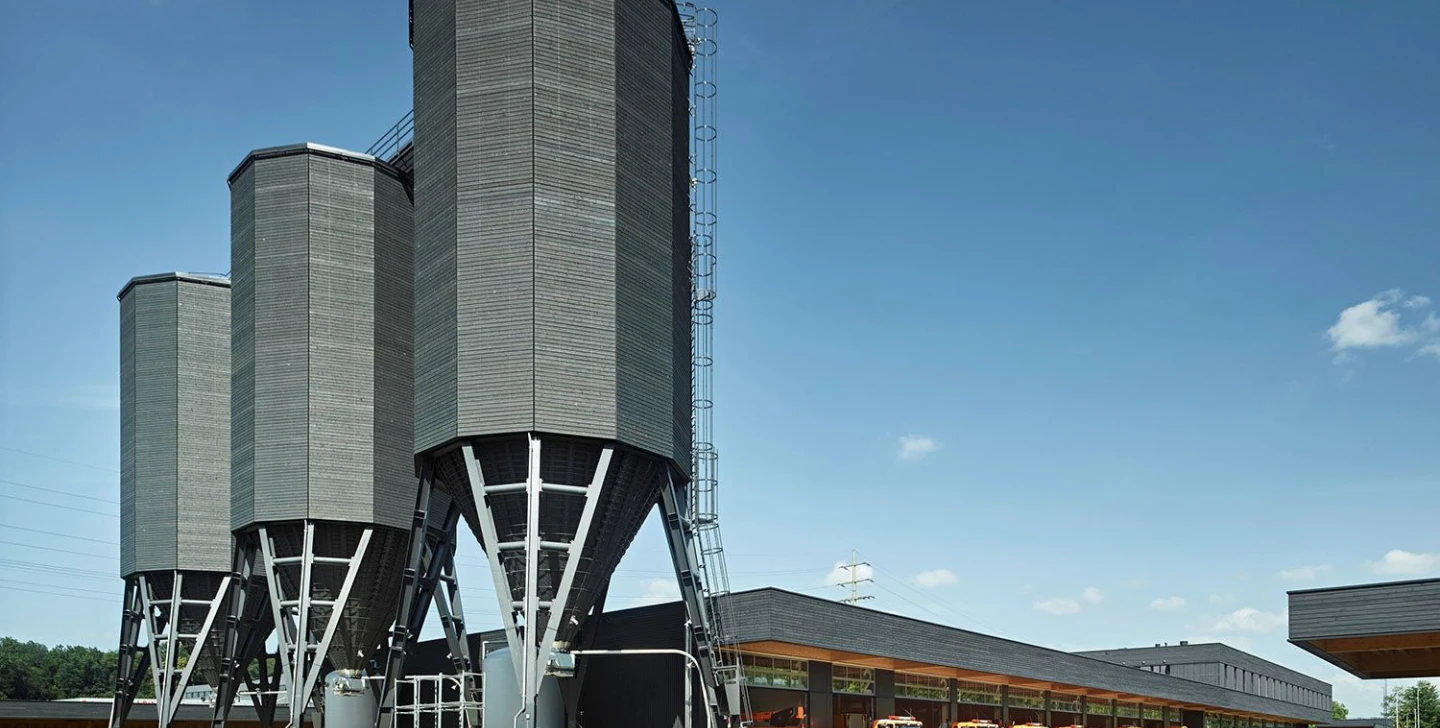
Brine is the method of choice for winter maintenance: it takes effect immediately, can be precisely metered and leaves no residue. The challenge: pump technology that can withstand the highly concentrated salt-water solution over the long term. SPECK has been supplying corrosion-resistant BADU pumps for the salt-dissolving plant at the motorway maintenance depot in Bern since 2014.
Background
Brine to combat slippery roads
Road safety in winter depends largely on winter maintenance services. Brine has clear advantages over salt and grit: the salt-water solution takes effect immediately, speeds up de-icing, can be dispensed more precisely and is easier to spray. This saves on salt and reduces costs – and because brine is not blown away by the wind, the surrounding area remains free of residue.
For S-Plan, a company specialising in brine systems for winter maintenance, this is nothing new. Numerous towns, local authorities, cantons and the federal government already rely on brine. In Bern, too, an S-Plan salt-dissolving system – powered by SPECK pumps – has been in operation since 2014.
„We chose SPECK pumps because they are corrosion-resistant and therefore suitable for long-term use with the salt water in our system. We were also impressed by their efficient operation, high flow rate and good value for money.“
Philipp K.
S-Plan AG
Implementation
Fully automated production and storage of brine
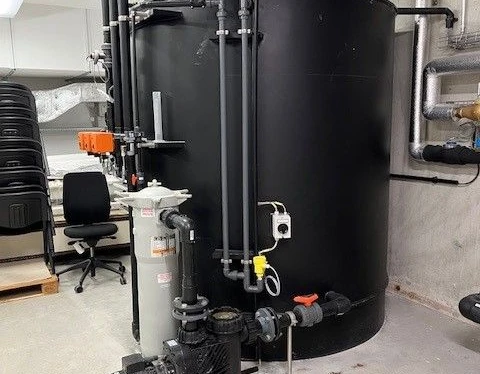
The salt dissolution plant is connected to a salt silo with a capacity of 900 m³ via a brine flush line. The desired brine concentration is set on the touch panel; the plant then handles the rest fully automatically: depending on requirements, the production tank holds between 3,000 and 10,000 litres and achieves a dissolution rate of 5,000 to 10,000 litres per hour – up to 24,000 litres of brine per day.
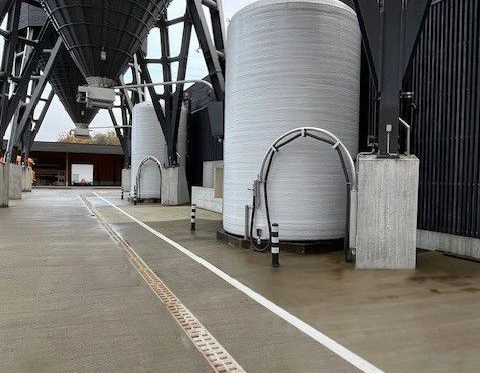
Two storage tanks, each with a capacity of 55 m³, are filled directly from the production line. As soon as winter-maintenance vehicles collect brine, the system automatically replenishes the supply, whilst recording users, loading volumes and tank levels. This results in around 1,000 m³ of ready-to-use brine per year for safe roads.
Technology and Products
Corrosion-resistant thanks to glass-fibre-reinforced plastic
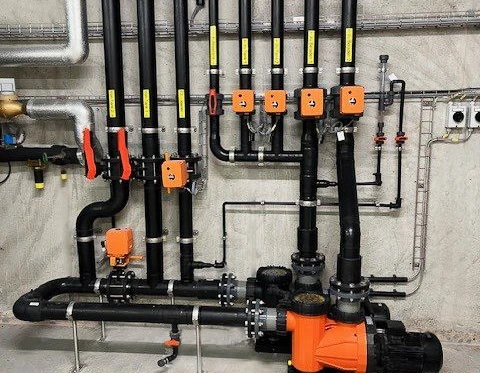
Salt is fed into the dissolving hopper via a screw conveyor, mixed with brine and processed in the brine generator to produce a ready-to-use solution. The plant is operated using pumps from SPECK: two BADU Resort 90 units serve as tank pumps with a loading capacity of 650 litres per minute, whilst a BADU Prime 30 acts as a mixing pump with a production capacity of 5,000 litres per hour. Their glass-fibre-reinforced plastic construction makes them particularly corrosion-resistant and durable – ideal for aggressive salt water – whilst delivering high efficiency and flow rates.

Highly efficient motor suitable for frequency converter operation For large pools, swimming pools and absorber systems
Result
Reliable brine production for safe roads
Parties involved
Reaching our goal with the right partners
From planning to after-sales service, S-Plan delivers brine systems – with SPECK as its pump partner.
S-Plan AG
For over 20 years, the Swiss company S-Plan AG has specialised in the design, installation, servicing and maintenance of brine systems, having completed around 200 installations during this time. The company drives technological progress and handles every stage of the construction process – from design and installation right through to a fully operational system.
Contact
Are you planning a brine or industrial plant?
Our team supports designers and plant engineers from the design stage right through to finding the right pump solution – even for demanding, corrosive media.

Thorsten Test
Test Rolle
References
Other interesting projects