Refurbishment, new builds or closure – the future of our swimming pool facilities
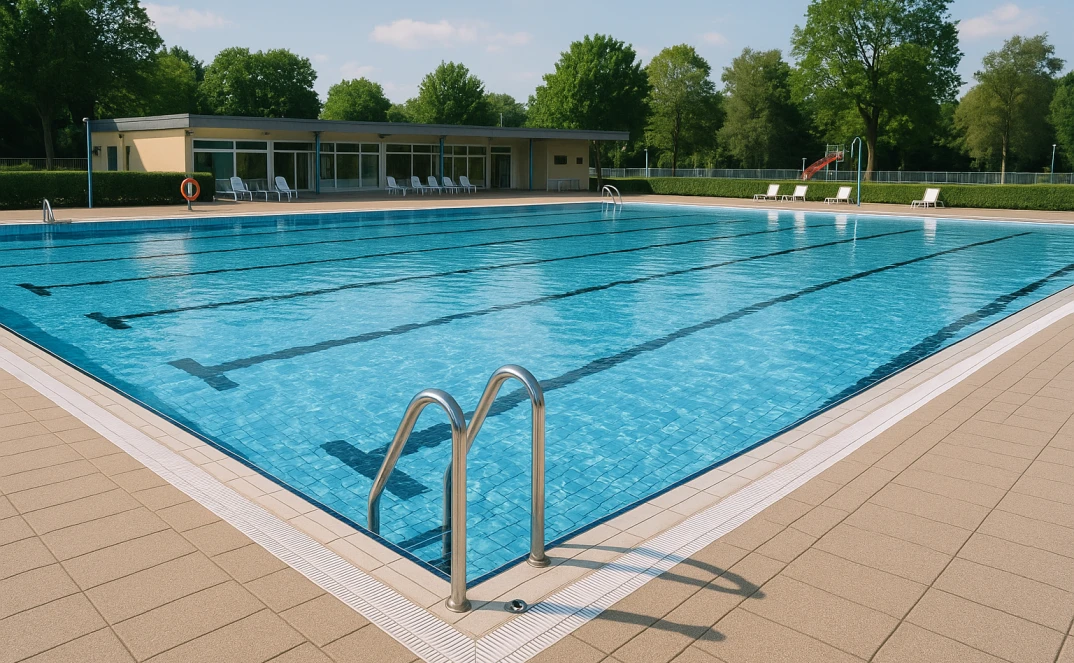
Swimming pools in transition: between the pressure to renovate and new concepts.
Opportunities for their long-term preservation as venues for sport, socialising and health.
For years now, the decline in the number of swimming pools in Germany has continued unabated: of the approximately 6,500 public swimming pools in Germany, around 800 are at risk of closure.
Cities and local authorities find themselves unable to shoulder the necessary investment for the upkeep of all swimming pools on their own. The federal government has announced investment in the refurbishment of swimming pools. However, it remains unclear whether, and to what extent, this funding will actually reach the local authorities. Despite political recognition of the importance of a functioning swimming pool infrastructure, other local authority responsibilities take precedence in many places in the face of ever-tightening budgets.
Against this backdrop, new concepts are emerging that make the operation of swimming pools more economical and sustainable.
Compact sports pools instead of leisure pools – fewer slides, more lanes.
Large leisure centres with slides, wave pools and adventure areas are popular, but expensive and, for many local authorities, virtually unaffordable. Compact sports pools are an increasingly sought-after and cost-effective alternative: equipped with a 25-metre pool, a teaching pool for lessons and club use, and a children’s pool. No extras, no costly attractions. The advantage: lower energy consumption, reduced staffing requirements, yet still a place that enables swimming for all generations and ensures a sustainable swimming pool infrastructure for local authorities.
Energy-efficient buildings – sustainability from the ground up.
Swimming pools today face a twofold challenge: energy costs are rising noticeably, whilst at the same time political pressure is mounting for refurbishment, new construction or closure – the future of our swimming pool landscape. Swimming pools in transition: between the pressure to refurbish and new concepts. Opportunities for long-term preservation as a venue for sport, socialising and health. Requirements for a better carbon footprint. Modern new swimming pool buildings consistently prioritise energy efficiency: highly insulated building envelopes, triple-glazed safety windows and the use of renewable energies such as combined heat and power units, solar thermal systems and photovoltaics significantly reduce energy consumption. Modern ventilation technology with heat recovery and intelligent building management systems ensure that room temperatures and systems are controlled according to demand. Even small measures, such as automatically lowering the water level during quiet periods, make a noticeable contribution to reducing costs.
Modern swimming pool technology – smartly controlled, efficiently operated.
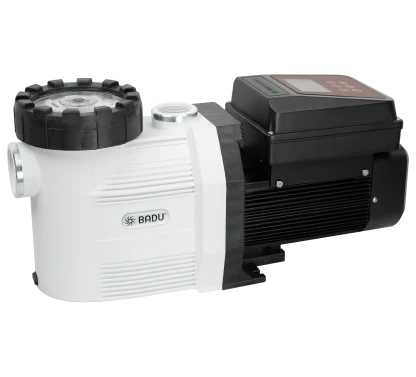
Modern water treatment systems are key to reducing operating costs and energy consumption. This includes modern filtration systems, high-efficiency variable-frequency pumps
(motors compliant with the IE3/IE4 standard; at SPECK, even IE5) as well as control systems that ensure all connected components operate in an energy-efficient manner. The flow rate is regulated precisely and according to demand, whilst chlorine dosing is adjusted based on actual usage. By digitally linking the control technology with visitor flow management, operations are optimised in real time: water circulation and the dosing of water treatment chemicals are adjusted to visitor numbers as required; from reduced operation during off-peak times to full capacity on peak days. This load control delivers sustainable savings in energy and operating costs.
The German swimming pool sector faces major challenges, but also has the opportunity to create sustainable structures through new concepts and modern technology.
Related articles

New 2026 Catalogue – BADU Private Swimming Pools
Take a look at the BADU catalogue for 2026 to get an overview of SPECK’s comprehensive product range and new products.
New BADU Swimming Pool Private Highlights catalogues
Get an overview with the ‘BADU Swimming Pools: Private Highlights’ catalogue for 2025.
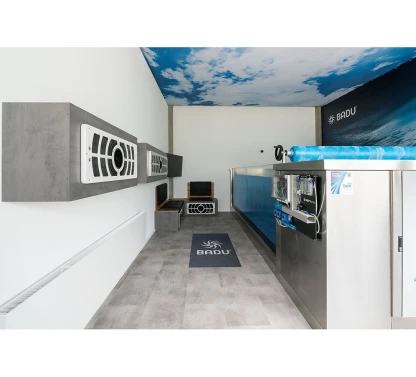
Test swim in the new showroom
Feel the power of the BADU JET Turbo Pro counter-current system!

The feeling of boundless space… experience it in your own pool!
Take a look at the new brochure for the BADU JET Turbo series of counter-current systems.
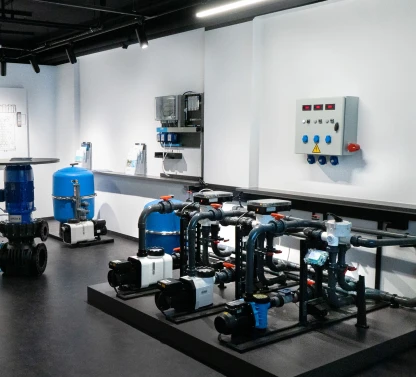
The feeling of boundless space… experience it in your own pool!
Just in time for the start of the season, SPECK Pumps is offering a significant upgrade for several models in the BADU Green product range.
New Products for 2025
Ready for the future – SPECK Pumps’ new products for 2025.